~ A Father’s Day Memoir ~
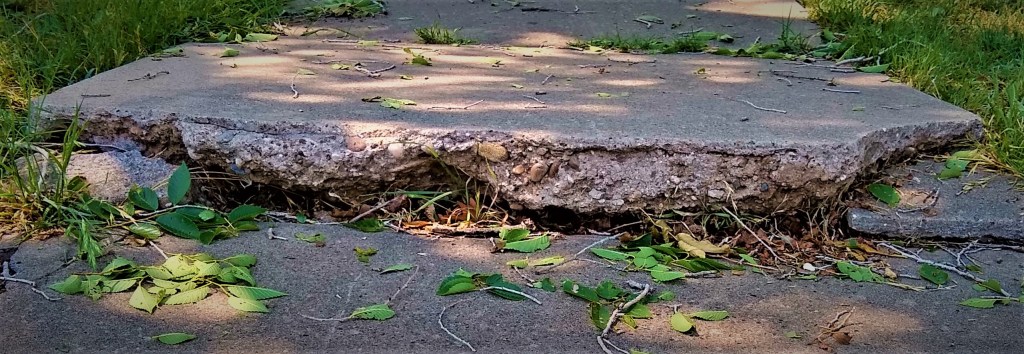
The autumn sky in our West Texas city is blue and cloudless, and the air is cool and dry. A few cars drive by on the red-bricked street, reminding us that the world is in full force. Dad steps down from the front porch onto the sidewalk. I follow, cautious to not rush him. He zips up his jacket with shaky hands and wipes his nose with a clean tissue. Dad turns to the right, breathes determinedly, and faces the sidewalk. The path he has walked countless times. The path known for its cracks and crevices.
“Let’s go,” he says with unreserved gusto.
We start the walk up the sidewalk. It is a comforting walk with many towering trees, although their roots have rearranged the sidewalk with frequent fissures and chunks of concrete jutting up to trip the courageous walker. This walk was established as a ritual since his diagnosis. Exercise soothes his spirit and keeps his muscles strong. I fear that as the months go by his strength will fade, but the walks might prolong his strength.
“Any news from China?” Just like the day before, he asks me this.
“Nothing new today,” I answer, walking briskly to match his pace. At that time in life, I was contracted as an English professor at a university in China.
“They still expect you in February?”
I hate to answer this question. I pause to signal reluctance but not too long to signal avoidance. “Yes,” I say honestly.
Such an uncertain future that day. The prognosis even more uncertain. Dad’s abdominal pain started in June, intensified in July, then became unrelenting in August. After two trips to the ER, a CT scan finally revealed a spot on his pancreas. The MRI showed it was a tumor. A biopsy said it was malignant. But, he had hope. He had strength.
“I’m hurting a bit today,” dad says.
“We’ll go as far as you can.”
He nods. He has yet to slow down.
“Did you take your morphine?”
“Yes. I hope it kicks in soon,” he replies.
“It usually does, doesn’t it?”
“I’m constantly sleepy,” is his reply. “I haven’t slept this much ever.”
In the eyes of many, dad was a great man. To me and my family, he was a giant. As a pastor for over forty years, God had blessed him with wisdom and knowledge unlike any other. As his wisdom and knowledge outmatched others, so did his strength. Each step along the sidewalk rattled his frame, leading to discomfort in his abdomen and back. But he persisted.
“I’ve been concerned about the church since getting sick. I hate to never be there. I know there’s so much work for the staff.”
“I know, Dad.” I want to say the staff can handle it, but I do not know if they can or not. Losing your leader abruptly to cancer treatment is not easy.
“I just don’t think I can be there in this condition.”
In his condition? It was a wonder he could walk along the dilapidated sidewalk. A few weeks earlier he had suffered an attack of severe pain on a hotel elevator in Dallas. He had just left a doctor’s visit that was hopeful but not curative. My sister and her husband stared helplessly. It was the worst pain they had ever seen in their lives. Mom told me that flare up was probably worse that her brain tumor pain. Dad, however, walked off the elevator, ran for water in the room, and swallowed a morphine pill. He rested and his walk continued.
One foot in front of the other, dad maneuvers each fissure in the aged concrete. At each piece that juts up or crevice that dips down, I am ready to grab his arm and steady him. In fact, I want to hold him steady, but his strength is unmatchable.
“Son, if I trip on this sidewalk, just catch me.”
“I got you, don’t worry,” is my reply.
Dad only fell one time during his days with cancer. He was with my older brother and tripped on a door threshold. My brother wasn’t close enough to catch him, but he did pull him to his feet. Dad, consistent as the West Texas winds, continued his walk.
“I reckon my fear is the staff and elders not knowing what to do,” dad says, thinking back to the church.
“Hopefully, there’s no mistake that can’t be undone,” is my shallow remark that dad doesn’t reply to.
“I remember making a mistake when I was 22,” dad says. “I told members of the church at the time they better come for church visitation or they weren’t real Christians.”
“Really?” The remark is a bit strong for dad.
“Yes. I had no idea how to be a pastor at 22.”
Dad’s confession revealed a layer to my dad that I had not seen often. Not that he refused to ever confess his sins, but rather I saw into my dad’s own spiritual growth. He was the most mature Christian I have ever known. I never knew him as a spiritual adolescent.
“Weren’t you 19 when you started pastoring?” I ask dad, remembering he had been very young for the ministry.
“Yes,” he says. “At those small country churches in East Texas. I doubt many of those people are still alive.” Dad navigates a curb, lifts his weakening leg, and steps forward. His feet sport the new walking shoes that were light on the store shelf but heavy on the fractured sidewalk.
“What do you remember most about those early years?” I ask, having little clue what those small country churches were like or who the people were in those pews.
He reminisces, “Mostly old folks. Sweet old folks. They all treated mom and me like kids. I don’t think we ever cooked a Sunday lunch.”
The mention of sweet old folks brought back my own memories of other church members. Over the years, a few elderly couples sought out my parents for friendship, whether it be playing games or dinners or words of encouragement. The sweet old folks were unforgettable.
“I just wish more people were like that now,” dad utters with a tinge of regret or remorse.
I couldn’t detect if he blamed himself or not for the broken relationships with some church members who came in and out of his ministry. “The best way to destroy a man of God is to put him on the church board.” I’ll never forget those words dad had articulated to me a few years prior. That shed some light on the acute frustration that stewed in his soul. Over the years, a few friends evolved from fellow servant to competitor.
Of course, dad was no perfect pastor. I knew it; my family knew it. When these church members discovered his imperfections, they were aghast. Often, their complaint was nothing more than the pastor refused to acquiesce to their demands. I do not doubt that dad was stubborn and determined in his position. When people experienced dad’s stubbornness, they uncovered the fact that their pastor was just being human.
Indeed, dad was human and imperfect. He suffered from it even though he was a giant of the faith. One evening meal during the putrid days of chemo, dad asked, “Why would God ever save me?”
“Because, well, because God loves you.” I mumbled the true expression but spoke weakly as if it was mere trite. Frankly, I was unsure where he was going with this.
“So many times,” dad said, “I just wonder why God would save me.”
I remember my wife and mom speaking to dad. He listened and rephrased his question, “But how do I know I am saved?”
We realized his meaning then. He was battling that ancient suffocating poison we call doubt. Yes, this giant was human, but he was honest and transparent. Even though he had taught us to never compromise the gospel but ever and ever hold to it, this human wrestled with doubt.
“If you weren’t saved, Dad, I think we all would know. You would not be the person you are” was my final response that dinner.
He nodded, deep in thought, then struggled to eat the food that tasted tasteless though it would nourish him.
Arriving at an intersection, dad looks left and right, then steps onto the asphalt. It is unshaded and empty. The light is clear and powerful. God is looking directly at his cancer-weary frame and recharging him.
“Let’s keep going,” he says. “Son, let’s go the whole way.”
Dad’s idea of the whole way was a two-mile trek along the neighborhood’s sidewalks. I doubted he could actually accomplish the walk that he enjoyed so much, but I was willing to walk with him.
“Dad, do you remember our hike a few years ago in the canyon?”
“Yes,” he says adamantly. “I love hiking to the Lighthouse.”
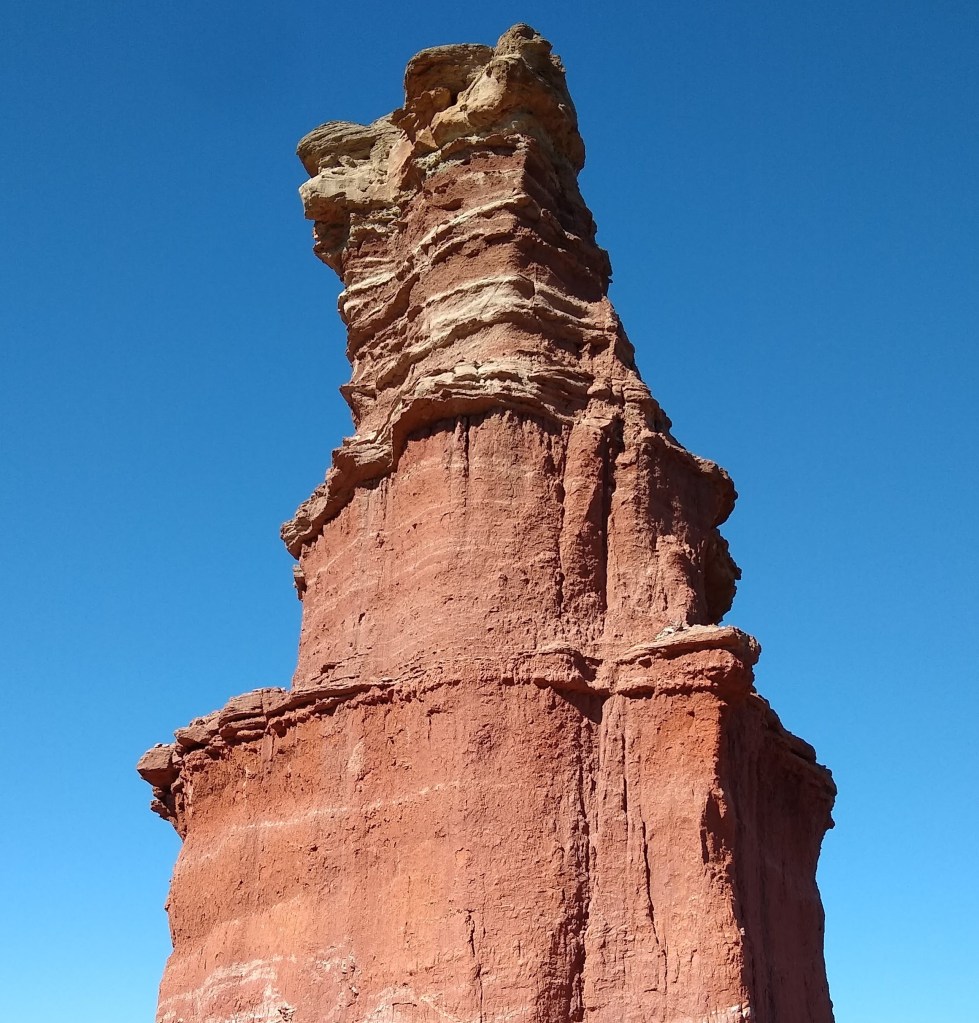
Visiting this natural formation and icon of the canyon was a lengthy six-mile hike to and from the car. With a water bottle in each hand, he took off full of energy. His stride was quick because he was delighted to live vigorously. Once on the trail and very near to the Lighthouse, the heat smothered us. We rested briefly in some shade, drank some water, then climbed the rocky trail that led to the Lighthouse.
“That was fun,” I say, “and very hot. Over a hundred, I bet. We probably didn’t have enough water.”
“Yes, we did. We survived.” I hear humor even then as he navigates another notorious jutting ledge of concrete so characteristic of the sidewalk. He is still full of life.
“Climbing in the canyon is always so much fun,” dad adds. “I love going there.”
“The sidewalk is as rough to walk as the canyon, Dad.” Once again, he is navigating a crevice that could easily trip him.
Dad grunts and grimaces and keeps walking.
“Do you remember the summer we went to Carlsbad Caverns as a family?”
“Yes,” he says, still adamant, cherishing the family memories. “I remember how cool it was deep in the caverns.”
Recalling those memorable walks refreshed us. My mind thought of other walks, such as the trip to Washington, DC, Williamsburg, and Jamestown. My parents loved history and those venues inspired them and lured them back several times.
However, the one unforgettable walk was the Great Wall.
“Do you remember when yall visited us in China?” I’m still asking questions as if he might forget.
“I’ll never forget, son.”
“The Great Wall was a fun day.”
“Unforgettable.” Dad stops talking and looks down to watch his step. We are crossing a red-brick street, not too unlike the Great Wall.
The driver had delivered us to the Mutianyu section of the Great Wall, north of Beijing. It was a clear day, very blue and very hot. My parents were brand new to China; we had lived there six years at that time. Of course, no one can visit China without a trip to the Great Wall. Even the Chinese say that if one does not visit the Great Wall, he is not a man.
We walked the main parts of Mutianyu as a family. However, dad wanted to explore the Wall higher and further to the west. My mom sighed and said she would love to rest in an ancient tower because they were cool and could still view the lovely scenes. My wife and young daughters said the same.
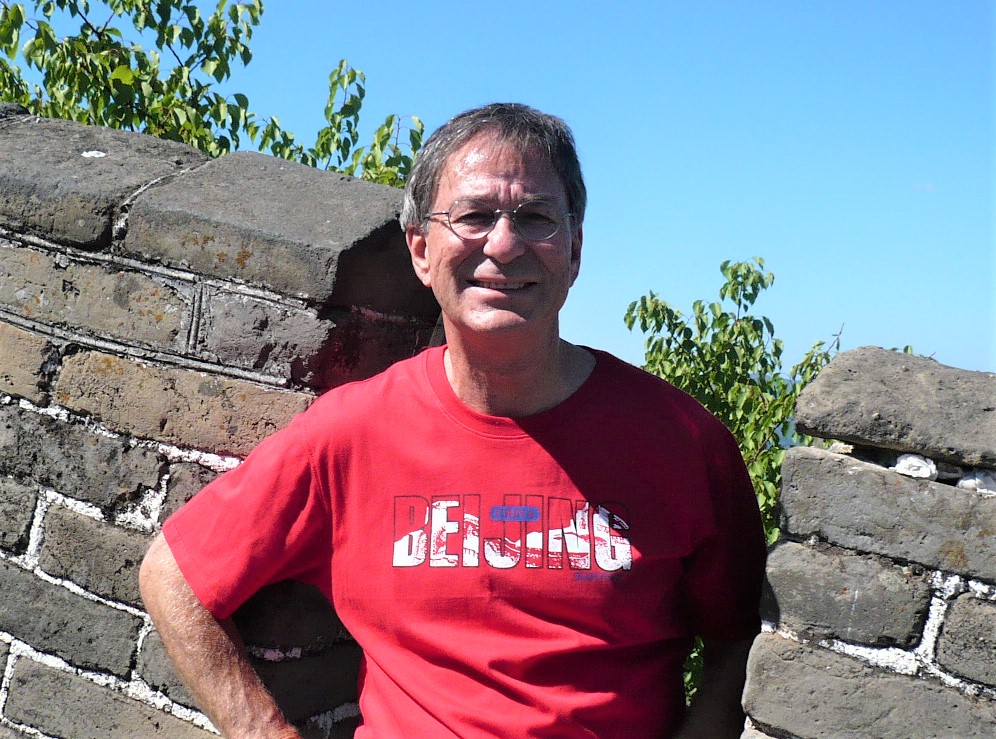
Dad and I began the climb up the Wall to the west. There were stairs in some parts, smooth pavements in other parts. We sweated very quickly and grew thirsty even quicker. Few fellow travelers were climbing as far we were. It wasn’t long until we were the only ones climbing that far west and that far high. The Wall was unfriendly and unlevel. The stairs were uneven and jagged. The greenery was hard to see since the sweat dripped into our eyes constantly. We paused to get a drink of water, careful to balance ourselves so that we would not fall backwards on the steep path.
“How far can we go, son?”
I looked up and said, “I think it’s blocked at the top of this mountain.”
“Well, let’s go see.”
Dad munched a handful of peanuts, took a sip of water, then kept going. Fifty-nine years old and still climbing to a zenith, a torturous zenith that was full of blessing at arrival.
Pausing on the sidewalk, dad is holding his stomach and trembling a bit. “How much further to 34th street?” he asks.
“Two blocks.”
He sips from a water bottle, pushes his sleeves up his forearm, then without a word of complaint, heads to 34th. He is slower now, but persistent, unrelenting.
Standing at the zenith of Mutianyu, a brick barrier declared we had reached the top and were to go no further. Dad peered around the barrier as he was catching his breath. “I bet we could go further.”
Dad is going further. His gusto is renewed. 34th is just before him. The cracked sidewalk that would love to trip him is like a gauntlet, but he doesn’t let his guard down. He walks, he steps high, he steps long, he steps short. He walks safely on the smooth stretches and hobbles across a grassy driveway. The sound of cars is just in his ears. We can see them just in front of us. One more stretch of sidewalk, just like one more stretch of the Great Wall or ridge to the Lighthouse. Dad has arrived, out of breath, weak, feeble, fighting the cancer battle, ever victorious, ever the applause of the great cloud of witnesses. He is trembling. He stares at a car speed by us. Once it passes, he steps down onto 34th itself.
“There. We did it.” He forces a smile and says, “Now we can go home.”
He lifts his hand to me. I pull him up back onto the sidewalk. Dad sips more water and I ask, “Are you ok? I can run get the car.”
I anticipate him agonizing the long return trip home. The steps back down the road required him to once again navigate the cracked sidewalk that could trip him so easily.
“No.” He is adamant. “It feels like I’m walking downhill.”
I was amazed, and still am as I recall what I witnessed. Dad was invincible. His steps were slow but still determined.
“Do you have any pain?”
“Just a 7,” dad answers nonchalantly.
That pain scale only goes to 10. It probably needs to go to 11 when the food you have eaten tears into your fragile digestive system and your tumor is burning like a stomach full of the hottest peppers on earth and your morphine can’t be taken for another hour. “Just a 7.”
Many nights, dad sat in the living room bent over as the tumor flared. Usually at this point, he had taken his morphine, but it had yet to take any effect.
“Will you pray for me, son?” Dad would ask.
So, I would pray. I prayed for God to heal the giant who sat in pain in the living room. I prayed for this giant when the nurse drew 17 vials of blood while he was part of a clinical trial. I prayed he wouldn’t pass out like I would have done. “It’s painless,” dad said. I was mortified, and I prayed.
Dad is trudging the sidewalk with a renewed strength from an unseen source. He comments on a house that he and mom once thought about buying. Another sip of water and another intersection and he grabs his stomach.
“Not feeling too good, son.”
“I can call mom to bring the car.”
“No.” He is still adamant in his decisions and walks to the parking lot of a neighborhood church. Dad leans over and vomits the water. He stands up and breathes slowly. “Good thing I know the pastor.”
I laugh, because I can imagine the generous pastor at this church say, “Tell your dad he can throw up here anytime he needs.”
Dad wipes his face with his sleeve and whispers, “Let’s go.”
Once again, although very slowly, he walks the sidewalk, still cracked and broken, a few jagged edges and missing chunks, a clump of grass here and there. Such a long sidewalk for one so sick. Such a long walk for one with numbered days.
A few days before his passing, dad walked from the sitting room to his bedroom. I was on his left arm and my younger brother on his right arm. Right in the middle of the dining room, dad stopped. His legs could go no further. We called our elder brother who came quickly and together we three lifted dad as gently as possible but still allowing him to move his legs to the bedroom. There were no cracks in the dining room carpet. No fissure to leap over. Nor was there a curb to negotiate, or bricks that could trip him easily. The soft carpet appeared insurmountable like the Great Wall, like the fissured sidewalk. Dad moved his legs ever so slowly with our arms to lift him. This was his last walk.
Such a joy to walk this walk along such a fractured pathway. Such a joy to climb this mountain and arrive at the celestial city.
When we arrive at the final block, my dad’s pace gets faster. I hear him breathing harder and he is holding his stomach again. “I’m gonna need to rest a bit,” he says, but he doesn’t stop.
We pass the familiar houses, cross the familiar driveways, and hurdle the familiar juts in the sidewalk. Experience has made all this manageable.
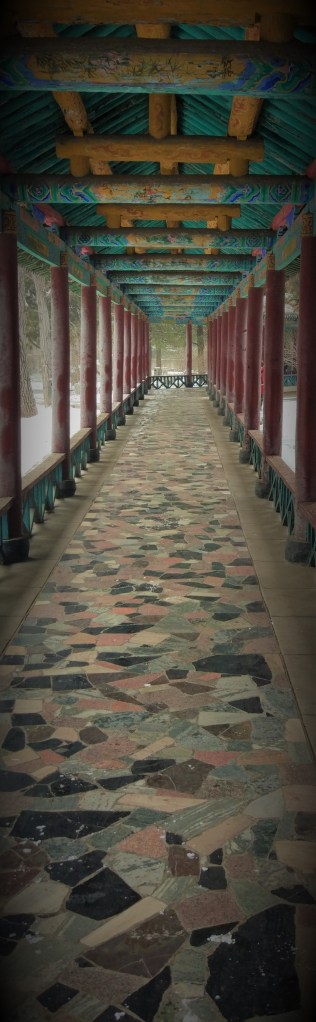
I stand at the walkway in front of my parents’ home and contemplate the long sidewalk we just walked. I am seeing the crevices and protrusions anew. The sidewalk is no longer a cracked and broken and ruptured relic of our hometown. Rather, the fissures turn into a work of art, much like my dad’s life. Moments of power and beauty, moments of imperfection and mortality. True, each fracture represents a low moment, and each stretch of smooth pavement a high moment. When viewed holistically, it is not a broken structure. It is a mosaic laid by a master Artist with the characteristic shards that when formed together reveal a masterpiece. A mosaic much like my dad’s life.
On the front porch of my parents’ home, dad holds his stomach, trembles with the door knob, and says, “If you can, son, let’s walk that one more time tomorrow.”
And we do.
 Jared Travis
Thank you for sharing that story with us. Pastor Dale had God’s strength through that tough journey and really all through his life. He was a true inspiration to me and I will never forget what he taught me . Love and miss him so much. Geneva Towndrow
LikeLike